Earth Day arrives each year like a summons. Not to recycle, or march, or post something green, but to reckon with a deeper question: what does it mean to belong to something? To the soil under your feet. To the air that moved through your mother's lungs before it moved through yours. To the long, unhurried intelligence of a living planet that has been doing this, quietly and without our permission, for four and a half billion years.
We treat nature as scenery, the pleasant backdrop to our busy days, the thing we hope to spend more time near. But nature isn't decoration. It's instruction, and it can be a force of real fury if pushed hard enough. If we're willing to slow down long enough to receive it, it tells us something about ourselves that no self-help book, no productivity app, and no perfectly curated morning routine will ever quite manage to say.
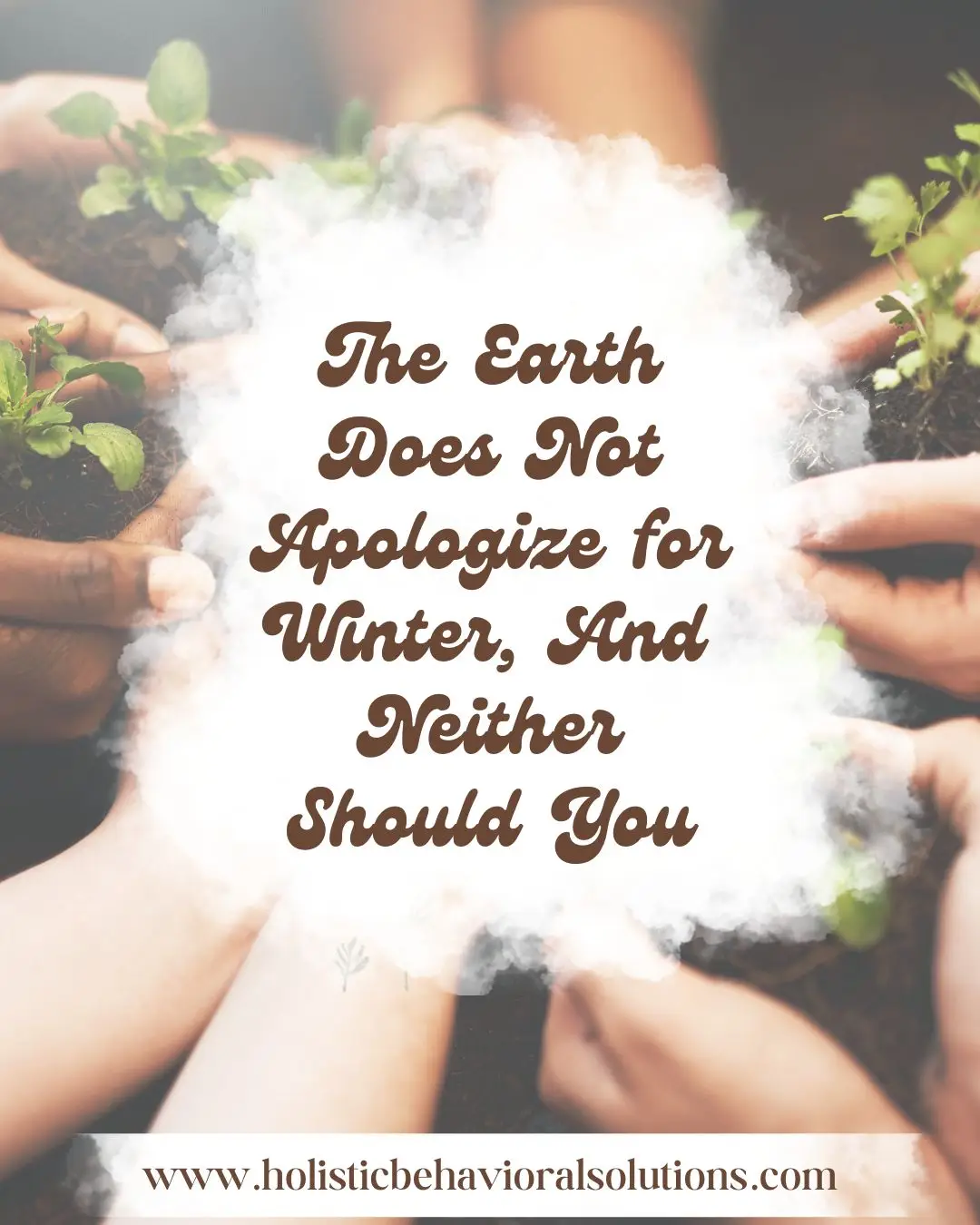
The Earth Does Not Apologize for Winter
We live in a culture that pathologizes stillness, that reads rest as laziness and silence as emptiness. Many of us have learned to see a fallow season as failure. We've been trained to perform growth continuously, to optimize ourselves relentlessly, to treat our own grief and confusion and exhaustion as problems to solve rather than seasons to live through. We rush our healing the way we rush everything else, and then we're surprised when we keep arriving at the same wounds.
Go outside sometime, and pay attention. The oak doesn't decide to shed its leaves; it yields to something larger than its own preference for staying green. The seed doesn't force itself open. It waits in darkness, drawing what it needs from what surrounds it, and when the conditions are right, not when we demand it, but when the time is genuinely right, it opens. It wasn't hurried. It was held.
Where Therapy and the Garden Meet
This is what good therapy tries to recreate: the conditions for genuine opening. It can't be forced, and it isn't a performance for anyone's comfort. It's the slow, patient work of becoming what you already were, before fear and loss and the world's long cruelty started telling you otherwise.
I went walking last week without my phone, which is its own small act of resistance these days, and I heard birds I'd never noticed before. I'd walked that same path a hundred times. The birds had always been there. I simply hadn't been quiet enough to notice. That's what the natural world offers, if we let it: an invitation to actually arrive in our own lives, rather than just performing the arrival. That's harder, and rarer, than it sounds.
Bringing the Garden Inside
There's a practice sometimes called inner gardening: tending to the emotional self with the same deliberateness and patience you'd bring to a plot of land. It isn't complicated. It only asks that you take seriously the idea that you, too, are a living thing, subject to seasons, in need of nourishment, capable of real growth when the conditions are right.
Try this: take fifteen minutes to walk outside without your phone. Not to exercise, or get somewhere. Just to notice. The texture of bark. The particular smell of new leaves. That almost-yellow green that only exists in spring, easy to take for granted until you actually see it. Let the sensory world interrupt the interior monologue that's been running the same story on repeat longer than you'd like to admit.
- Write your emotional weather. Not what you think you should feel, but what you actually feel. Are you in spring, tender with new beginnings? In summer, burning with energy you don't quite know how to use? In fall, releasing something you've held too long? In winter, resting in the dark, gathering strength you can't yet see? There's no shame in winter.
- Plant something. It sounds simple because it is. Nurturing another living thing, even a windowsill herb you'll probably forget to water sometimes, is a small act of defiance for anyone who's spent years being told they aren't worth nurturing. The plant doesn't judge you. It only asks for a little water and light. That's also what you need. Give it freely to something else, and notice what loosens in you.
- Walk barefoot on grass or soil for a few minutes. Feel the ground under your feet, not metaphorically, literally. Your nervous system knows things your thinking mind has forgotten, and direct contact with the earth can reach those places. This is physiology. The body isn't a vehicle for the mind. It's where you actually live.
Compost and Grace
Nothing that is faced can be changed until it is faced. It's an idea the earth has understood far longer than we have, and one the writer James Baldwin captured with more precision than most of us ever will. The fallen leaf doesn't become soil by being ignored. It becomes soil by being fully broken down, by surrendering its original form, by taking part in a transformation that looks, from the outside, entirely like decay.
Our emotional lives work the same way. The grief you haven't grieved, the anger you haven't named, the fear you've carried in your chest like a stone: these don't disappear when you refuse them. They become the thing underneath everything, the soil condition that determines what can and can't grow. But faced gently, with the same patience you'd give a garden, they become nutrients. They become the very richness that makes everything else possible.
Change is uncomfortable. It hurts sometimes. But the oak doesn't find winter comfortable either, and it doesn't die. It deepens its roots in the dark, and come spring, it doesn't explain itself or apologize for the months of stillness. It simply blooms.
You are allowed to do the sameAn Invitation for This Week
Choose one practice above and give it your full attention, not as a task to complete, but as a genuine question. What does the walk teach you? What does the journal page reveal? What does the small, growing thing on your windowsill ask of you?
You may be surprised by what you find. Maybe you were already becoming. Maybe you just needed, as all living things do, a little more time, a little more water, and the grace to believe the season will turn. It always does.
Support Your Practice from the Inside Out
Our Holistic Store offers wellness supplements chosen to support your emotional and mental health, alongside the work you're already doing here. Explore products that align with your journey toward balance and connection.
Visit the StoreAre you a culturally competent clinician who values inclusivity and emotional support? Our New Jersey practice is hiring. Visit our Careers page to explore opportunities to join a team committed to fostering mental well-being.
Written by Tamara Pommells, LPC, LCADC, ACS. Last updated April 22, 2026.